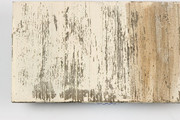
We've been fairly dry over here, so here's something I learned a while ago.
There's a fellow by the name of Chuck Doan who posts his model diorama photos on Fotki. I've followed his work for many years and tried a technique that he described on a 1:16 project. His idea works because oil and water do not mix.
The idea starts with real wood. I chose a scrap of 1/16" basswood. Pre-texturing it along the grain with a brass brush or other tool probably would have improved the peeling pattern.
Here's the plan:
- Stain the wood a weathered gray color. Stain the back too so that it doesn't curl up like a potato chip.
- When the stain has dried, use a brush and soak the wood with mineral spirits. This is the oil.
- Watch the surface and when the sheen has flashed off, start brush painting with the final acrylic wall color. Yes, brush paint!
- Since oil and water don't mix, the acrylic paint will stay soft at the wood boundary after the surface hardens. Water won't pass into the oily wood as easily as dry wood.
- Presuming you are learning on a scrap piece of wood, lay down a strip of Scotch Magic Tape. To attempt otherwise on a real model isn't at all wise. Don't blame me!
- Using a narrow tool such as a fingernail, press down the tape on narrow, long selected bits in the direction of the grain.
- After taping an area, pull the tape back up. Where the tape adhered to the paint, the paint will peel. Learn to control how to press down the tape, and the working time before the oil dries out.
Here's a photo of my first and so far only attempt from a couple years ago. But I plan to try this on a freight station model for Sobol Springs. Click on the photo to enlarge it.
All the best,
Bob